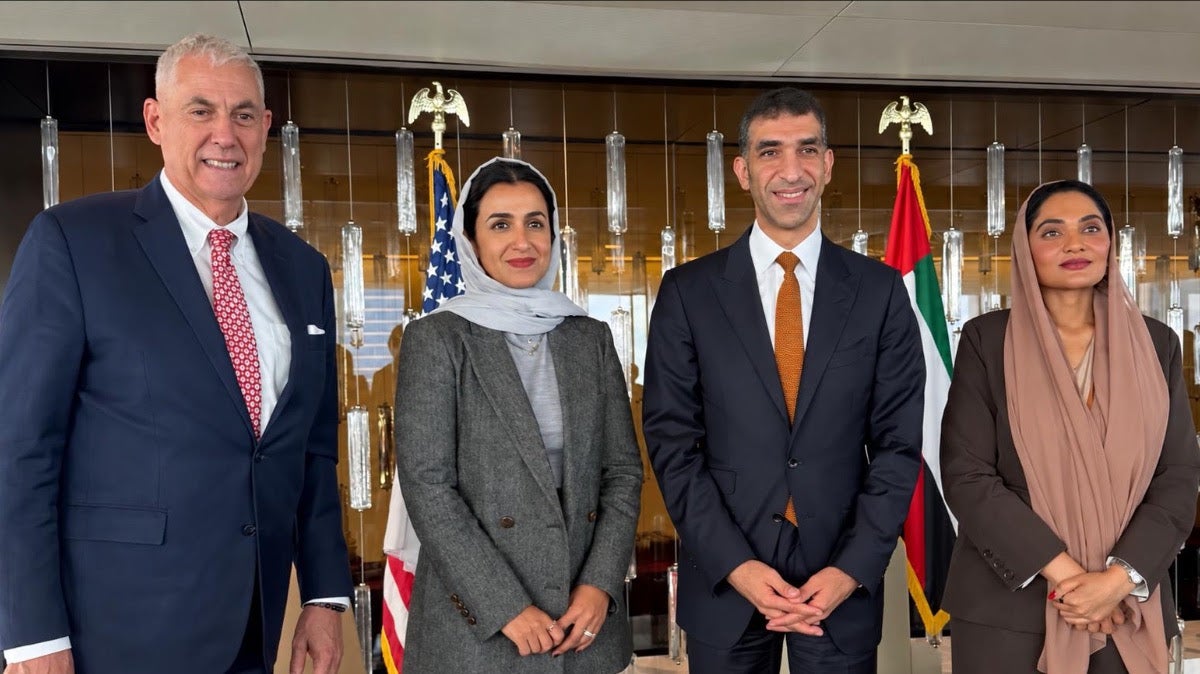
“We are going to provide the platform for American companies to grow and do business with the rest of the world.” – H.E. Dr. Thani Al Zeyoudi, U.A.E. Minister of Foreign Trade
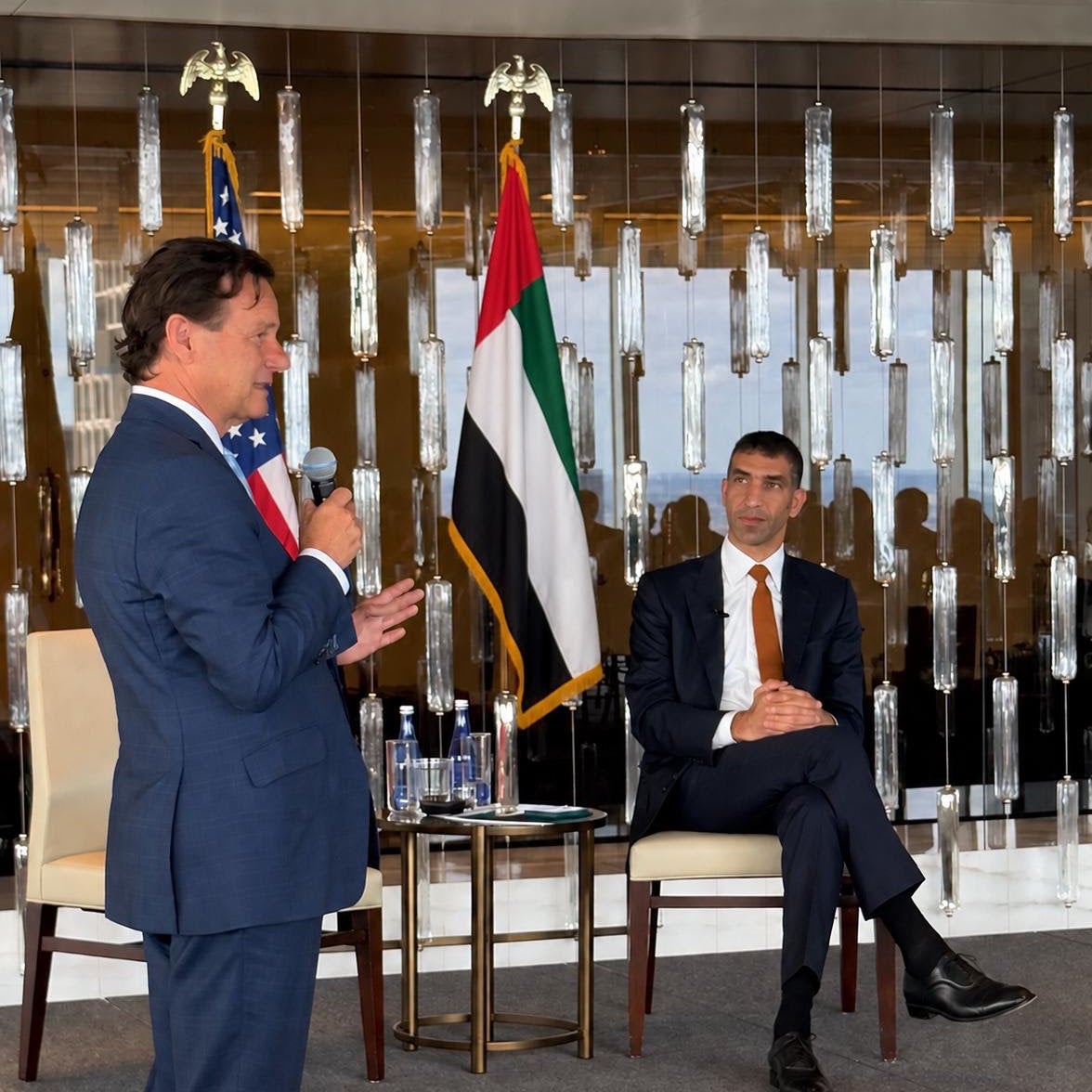
The U.S.-U.A.E. Business Council hosted a luncheon roundtable with H.E. Dr. Thani Al Zeyoudi, U.A.E. Minister of Foreign Trade, on Thursday, September 24th in New York City on the sidelines of the 81st United Nations General Assembly (UNGA). Held at Bank of America’s headquarters in Midtown Manhattan, the roundtable brought together approximately 50 senior executives from leading U.S. and U.A.E. companies for a discussion on the continued expansion of the U.S.-U.A.E. economic relationship, the U.A.E.’s evolving foreign trade agenda, and opportunities to deepen bilateral trade and investment.
U.S. Deputy Assistant Secretary for the Office of Middle East and Africa at the U.S. Department of Commerce Mark Mitchell also attended the luncheon and thanked H.E. Dr. Al Zeyoudi for all that the U.A.E. has been doing not only to promote opportunities for American business, but also to keep everyone safe during the current conflict.
The broader discussion at lunch covered the U.A.E.’s foreign trade priorities, the expansion of its global trade relationships, the resilience of international supply chains, and opportunities for U.S. companies to expand their commercial engagement with the U.A.E.
U.A.E. Foreign Trade and Economic Growth
- The discussion highlighted the continued growth of the U.A.E.’s non-oil economy and the country’s efforts to strengthen its position as a global hub for trade, investment, and logistics.
- The U.A.E.’s non-oil foreign trade reached a record AED 1.94 trillion ($528 billion) during the first half of 2026, representing a 13.1% increase compared with the same period in 2025. Non-oil exports increased 23.9% year-over-year to AED 452.8 billion ($123 billion).
- The conversation also addressed the U.A.E.’s efforts to diversify its economy into emerging and high-growth sectors, including artificial intelligence, clean energy, climate technology, food and water security, and sustainable infrastructure.
- The U.A.E. is investing heavily in AI as well as the physical and digital infrastructure needed to attract companies, enable pilots, and support their growth at scale.
Expanding the U.A.E.’s Global Trade Network
- H.E. Dr. Al Zeyoudi discussed the U.A.E.’s continued efforts to broaden its global commercial relationships through its Comprehensive Economic Partnership Agreement (CEPA) program, which was launched in September 2021.
- As of September 2026, the U.A.E. had concluded 39 CEPAs, with 18 agreements in force, expanding the country’s preferential trade relationships across markets in Asia, Africa, Europe, and the Americas.
- CEPAs are an integral part of the U.A.E.’s diversification strategy, with another 7–8 expected by year-end.
- The discussion examined how this expanding network of trade agreements could create new opportunities for international companies to use the U.A.E. as a gateway for accessing markets across multiple regions.
Navigating a Changing Global Trade Environment
The roundtable addressed the impact of regional instability and geopolitical developments on international trade, energy routes, and global supply chains, as well as the importance of maintaining resilient and reliable commercial networks.
“Defending the country means defending your own people, defending your own land and defending your guests.” – H.E. Dr. Al Zeyoudi
- Participants discussed the U.A.E.’s continued domestic investments in ports, airports, railways, roads, free zones, storage facilities, and digital systems to strengthen the resilience and competitiveness of the country’s logistics network. The Business Council’s 18-24 November infrastructure trade mission will provide a platform for U.S. companies to explore these opportunities and connect with U.A.E. partners advancing the country’s infrastructure priorities.
- The U.A.E. has seen an increase in oil trade amid changing regional trade flows despite the ongoing conflict.
- H.E. Dr. Al Zeyoudi also discussed the U.A.E.’s broader international economic engagement, including its participation in BRICS, and how these relationships fit within the country’s strategy of maintaining open economic ties with partners around the world.
New Infrastructure Spend in the U.A.E.
These investments are intended to support the U.A.E.’s longer-term strategy of continued trade growth and economic diversification, rather than serving solely as short-term responses to current regional conditions.
The U.A.E. is making significant new domestic infrastructure investments to strengthen economic resilience, protect trade flows, and ensure the security of existing and future investments.
The country is reengineering logistics routes and developing alternative trade infrastructure to reduce vulnerabilities and maintain the movement of goods amid regional disruptions.
New infrastructure spending also extends to AI and data centers, with the U.A.E. investing heavily int he underlying infrastructure needed to attract companies, support pilot projects, and enable them to scale.
Plans for certain data center and strategic infrastructure projects are being modified to address security considerations, reflecting a broader emphasis on protecting critical investments while continuing development.
Strengthening the U.S.-U.A.E. Economic Partnership
- The discussion underscored the depth of the U.S.-U.A.E. commercial relationship and opportunities for continued cooperation across advanced technology, manufacturing, energy, financial services, healthcare, logistics, and other priority sectors.
- Recent U.S. trade data demonstrated the scale of these ties. In 2025, bilateral U.S.-U.A.E. goods trade totaled approximately $39 billion, including approximately $31.4 billion in U.S. exports to the U.A.E. The U.A.E. remained one of the United States’ most significant commercial partners in the Middle East.
- During the first seven months of 2026, U.S. exports to the U.A.E. totaled approximately $17.0 billion, while U.S. imports from the U.A.E. totaled approximately $3.6 billion, bringing two-way goods trade to approximately $20.6 billion over the period.
The U.A.E.’s Commitment to Invest $1.4 Trillion in the U.S.
- Business Council President Danny Sebright reminded the audience that two-way trade and investment is a key component of the overall U.S.-U.A.E. relationship.
- Special Presidential Advisor for the Middle East and Africa Massad Boulous told a Business Council audience last week in the U.A.E. that the Trump Administration now estimates that the U.A.E. has crossed the $200 billion mark in new U.S. investments committed to during President Trump’s historic visit to the U.A.E. in May of 2025.
- H.E. Dr. Al Zeyoudi agreed that the U.A.E.’s new investments into the U.S. market in these same priority verticals strengthen and advance the overall trade partnership in critical ways.
For more information about the U.S.-U.A.E. Business Council’s cyber security programming, please contact Caitlin Cottrell at ccottrell@usuaebusiness.org.